Olive Oil vs. Butter: What the Long-Term Studies Found
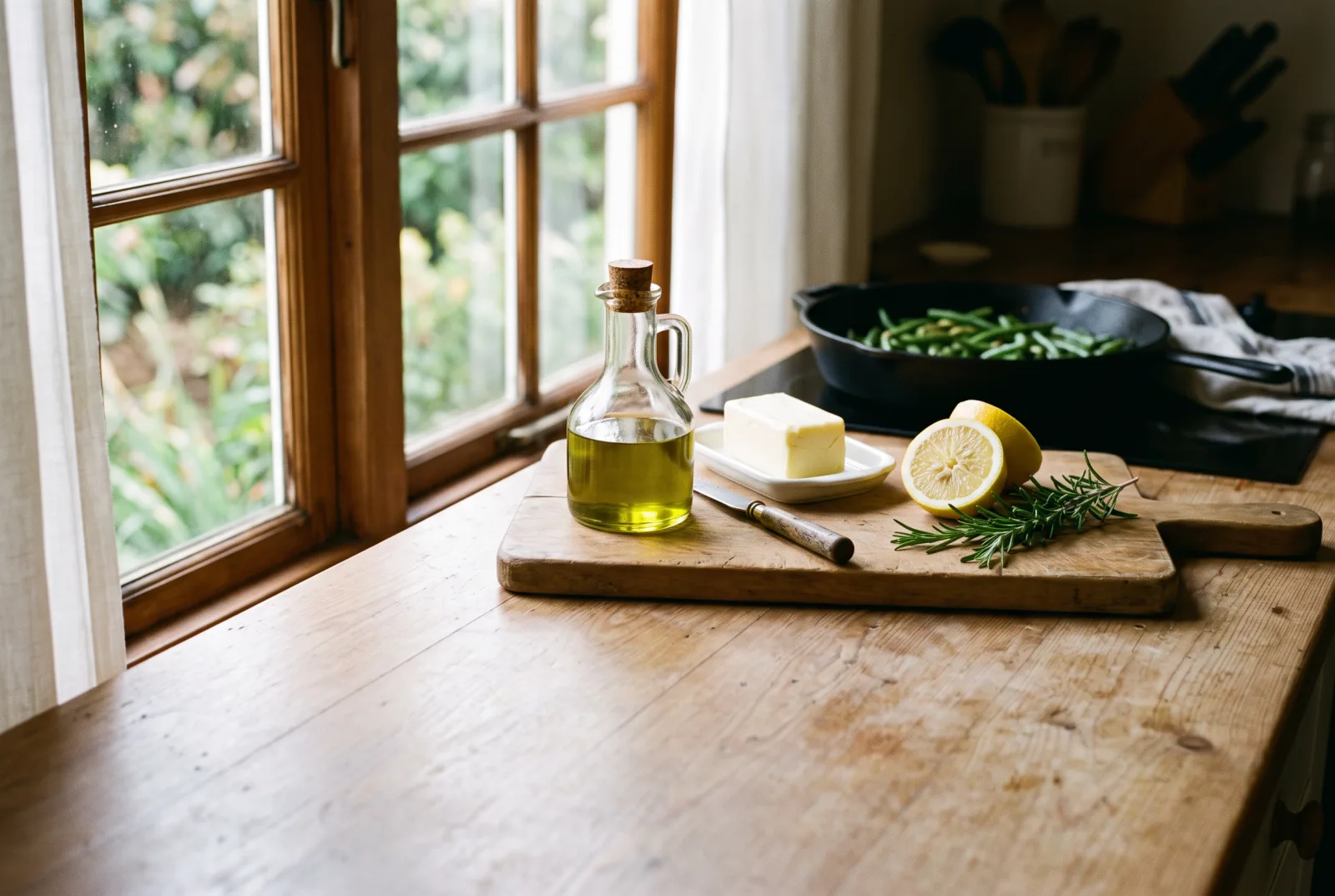
In a 28-year study of more than 92,000 U.S. adults, using more olive oil, especially in place of butter, was linked to lower death rates. Butter isn't banned, but small swaps add up.
In this article
If you grew up with a butter dish on the table, you've probably wondered whether switching to olive oil is worth it. The long-term research points in a fairly clear direction. In a large study that followed more than 92,000 American adults for 28 years, people who used the most olive oil had a lower risk of dying during the study than people who rarely used it. And when the researchers modeled swapping butter, margarine or mayonnaise for olive oil, the swap was linked to lower risk too.
That doesn't make butter off-limits. The current Dietary Guidelines for Americans still list it as an option. The real story is about the type of fat you use most often, and how a few small kitchen habits can shift the balance without giving up the foods you enjoy.
What's in a tablespoon of each
Butter and olive oil are both concentrated fats, but the fats inside them are very different. Butter is mostly saturated fat. Olive oil is mostly monounsaturated fat. Here's how one tablespoon of each compares, using figures from the U.S. Department of Agriculture's FoodData Central database:
| Per tablespoon | Butter, salted (14.2 g) | Olive oil (13.5 g) |
|---|---|---|
| Calories | 102 | 119 |
| Total fat | 11.5 g | 13.5 g |
| Saturated fat | 7.3 g | 1.9 g |
| Monounsaturated fat | 3.0 g | 9.8 g |
| Polyunsaturated fat | 0.4 g | 1.4 g |
Two things stand out. First, a tablespoon of butter carries nearly four times the saturated fat of a tablespoon of olive oil. Second, olive oil actually has slightly more calories per tablespoon, because butter is part water. So the case for olive oil isn't about calories. It's about which kind of fat you're getting.
To put the saturated fat in context: MedlinePlus, from the National Library of Medicine, notes that on a 2,000-calorie day, the federal limit works out to about 22 grams of saturated fat. One tablespoon of butter uses up about a third of that. A tablespoon of olive oil uses less than a tenth.
What the long-term studies found
The best-known recent study on this question was published in the Journal of the American College of Cardiology in 2022 by Marta Guasch-Ferré and colleagues at the Harvard T.H. Chan School of Public Health. They drew on two long-running studies: the Nurses' Health Study (60,582 women) and the Health Professionals Follow-up Study (31,801 men). None of the participants had cardiovascular disease or cancer when the study began in 1990, and every four years they filled out detailed questionnaires about what they ate, including how they used olive oil for dressings, cooking and at the table.
Over 28 years of follow-up, here's what the researchers reported:
- People in the highest olive oil group, more than half a tablespoon a day, had a 19% lower risk of dying from any cause during the study than people who never or rarely used olive oil.
- The researchers reported similar patterns when they looked at specific causes of death.
- When the researchers modeled replacing 10 grams a day (about three-quarters of a tablespoon) of margarine, butter, mayonnaise or dairy fat with the same amount of olive oil, the swap was linked to an 8% to 34% lower risk of death overall and from specific causes.
- When olive oil was compared with other vegetable oils combined, the researchers found no significant difference.
That last point matters for everyday cooking. The study didn't suggest olive oil is the only "good" fat. The clearest contrast was with butter and other animal or solid fats, not with plant oils such as canola.
What this kind of study can and can't tell you
This was an observational study, which means it shows a link, not proof that olive oil itself caused the difference. The authors noted that people who used more olive oil also tended to be more physically active, less likely to smoke and ate more fruits and vegetables. The researchers adjusted for those factors, and for neighborhood income and education levels, and the results held up, but they acknowledged that other differences can't be fully ruled out. The participants were also mostly white health professionals, so the findings may not apply equally to everyone.
Still, the authors noted that the results line up with earlier observational studies from Mediterranean and European countries, and the study's size and length make it hard to dismiss.
Why the type of fat matters
The reason researchers focus on swaps rather than single foods comes down to how different fats behave in the body. According to MedlinePlus, saturated fat raises LDL ("bad") cholesterol, and monounsaturated fats, the kind that dominates olive oil, are linked to lower LDL when they're used in place of saturated fat.
The key words are "in place of." Adding olive oil on top of everything you already eat isn't the same as swapping it for butter. The research consistently looks at replacement: one fat in, another fat out.
What the Dietary Guidelines actually say
The Dietary Guidelines for Americans, 2025–2030, published by the U.S. Department of Agriculture and the Department of Health and Human Services, keep a familiar limit: in general, saturated fat should stay under 10% of total daily calories.
On cooking fats, the guidelines say to prioritize oils with essential fatty acids, such as olive oil, while noting that butter or beef tallow can be other options. They also acknowledge that more high-quality research is needed on which types of dietary fat best support long-term health.
Put together, the message is less "never use butter" and more "make olive oil and other plant oils your everyday default, and keep an eye on saturated fat across the day."
Simple swaps for everyday cooking
You don't need to overhaul your kitchen. A few habits can shift most of your cooking fat toward olive oil:
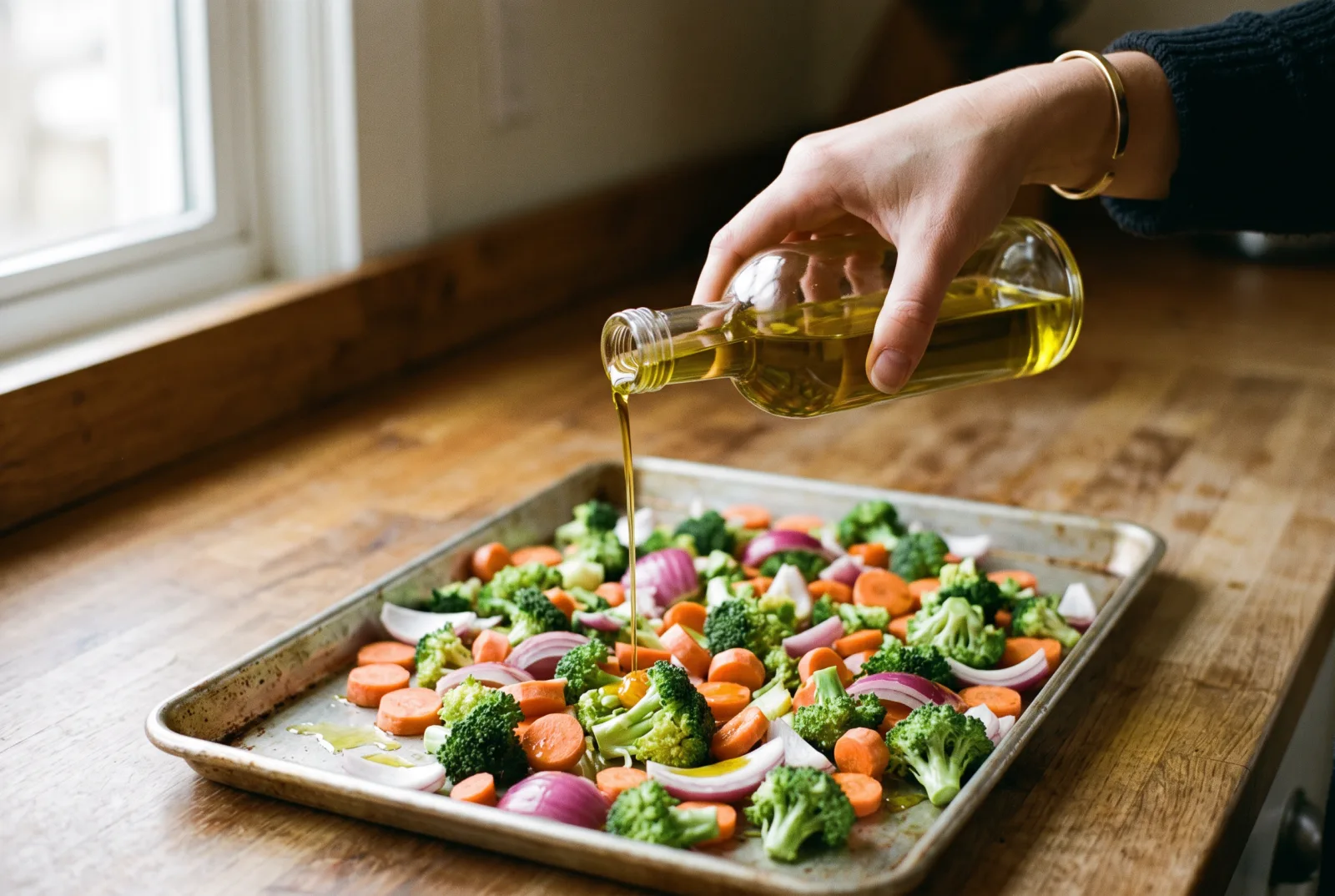
- Roast and sauté with olive oil. Toss vegetables, potatoes or chicken in a little olive oil before roasting, and use it in the skillet for eggs, greens and stir-fries.
- Use butter as a finishing touch. If you love the taste of butter, cook in olive oil and add a small pat at the end for flavor. You keep the taste and use less.
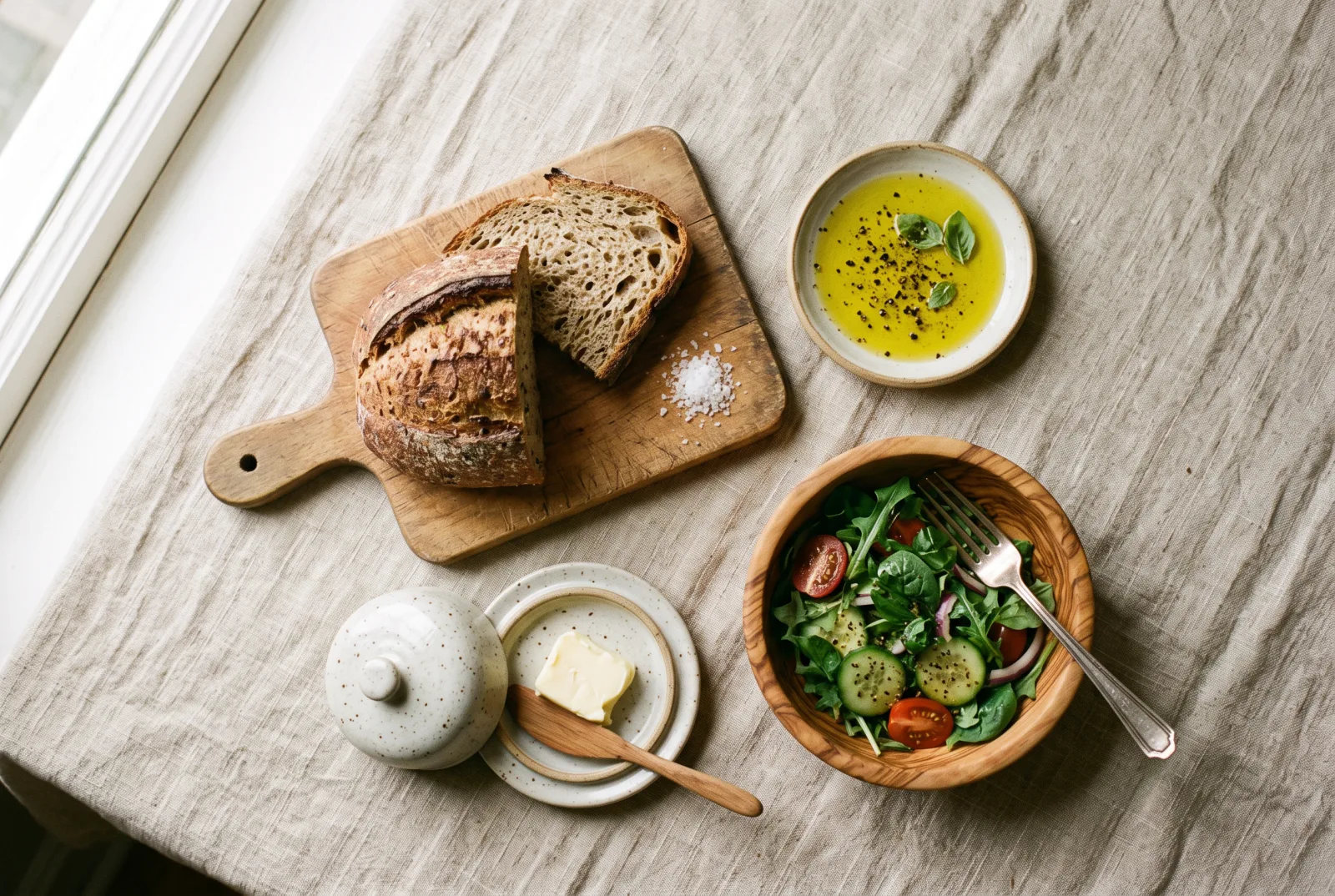
- Dip instead of spread. A saucer of olive oil with black pepper or dried herbs works nicely with bread in place of butter.
- Make a simple vinaigrette. The Harvard study included mayonnaise in its swap analysis. Olive oil, vinegar or lemon juice, and a pinch of salt make a dressing in a minute.
- Drizzle, don't dollop. A light drizzle of olive oil on a baked potato, steamed vegetables or a bowl of beans can stand in for a pat of butter.
- Keep other plant oils in the rotation. Since the study found no significant difference between olive oil and other vegetable oils combined, a neutral oil such as canola is a reasonable choice when you don't want olive oil's flavor.
For baking, recipes that call for melted butter are usually the easiest to adapt with oil. Recipes that depend on creaming solid butter with sugar, such as many cookies and pastries, rely on butter's texture, so those are fine to leave as occasional treats.
One more reminder: olive oil is still about 119 calories per tablespoon. Measuring with a spoon rather than pouring straight from the bottle helps keep portions in line with what you intended.
The short version: a quick checklist
- One tablespoon of butter has about 7.3 grams of saturated fat; olive oil has about 1.9 grams, according to USDA data.
- In a 28-year study of more than 92,000 U.S. adults, higher olive oil use was linked to lower death rates, especially when it replaced butter, margarine, mayonnaise or dairy fat.
- The study is observational: it shows a link, not proof of cause.
- The Dietary Guidelines cap saturated fat at 10% of daily calories and suggest prioritizing oils such as olive oil, with butter as an option.
- Swap rather than add: cook with olive oil, finish with a little butter if you like, and keep other plant oils in the mix.
Sources
- Guasch-Ferré M, et al. — Consumption of Olive Oil and Risk of Total and Cause-Specific Mortality Among U.S. Adults, Journal of the American College of Cardiology, 2022
- U.S. Department of Agriculture and U.S. Department of Health and Human Services — Dietary Guidelines for Americans, 2025–2030
- U.S. Department of Agriculture, FoodData Central — Butter, salted
- U.S. Department of Agriculture, FoodData Central — Oil, olive, salad or cooking
- MedlinePlus, National Library of Medicine — Facts about saturated fats
- MedlinePlus, National Library of Medicine — Facts about monounsaturated fats
This article is general information, not medical advice. Talk to your doctor before changing your diet, exercise or medication.