How Much Water Do You Actually Need?
The National Academies put daily needs at about 2.7 liters of total water for women and 3.7 for men, from all drinks and food. Thirst guides most people, but it can fade with age.
In this article
"Drink eight glasses of water a day" is one of the most repeated pieces of health advice around, and it isn't what the official guidance says. The National Academies, which set the reference amounts used across the U.S., put typical daily needs at about 2.7 liters (91 ounces) of total water for women and about 3.7 liters (125 ounces) for men. That total comes from everything you drink and eat, including coffee, tea, milk, soup and juicy fruit. About a fifth of it typically comes from food.
The same expert panel said most healthy people meet their needs simply by letting thirst be their guide. There's one important wrinkle for readers over 50, though: the sense of thirst can become less reliable with age. Here's what the numbers really mean, where the "eight glasses" idea falls short, and a few easy habits that take the guesswork out.
What the official numbers really say
In 2004, a panel of the Institute of Medicine of the National Academies set "adequate intakes" for water, based on national survey data from people who appeared to be well hydrated. According to the report:
- Women: about 2.7 liters (91 ounces) of total water a day, of which about 2.2 liters, roughly 9 cups, typically comes from beverages.
- Men: about 3.7 liters (125 ounces) of total water a day, of which about 3.0 liters, roughly 13 cups, typically comes from beverages.
- Food counts: about 80% of people's total water comes from drinking water and other beverages, and about 20% comes from food.
- Caffeinated drinks count too: the panel said caffeinated beverages can contribute toward daily needs just as non-caffeinated ones do.
These amounts are the same for adults aged 51 to 70 and over 70 as for younger adults.
Just as important is what the panel said these numbers are not. The full report explains that because a wide range of intakes is compatible with normal hydration, the adequate intake shouldn't be read as a specific daily requirement. Drinking a bit less than the reference amount on a given day isn't a problem for a healthy person. Needs also rise in some situations: the panel noted that very active people who are continually exposed to hot weather often need six liters or more a day.
The latest Dietary Guidelines for Americans, 2025–2030 keep the advice simple: hydration is a key factor in overall health, and the best choices are water (still or sparkling) and unsweetened beverages.
Why "eight glasses" isn't the rule
If the guidance doesn't say eight glasses, where does the rule come from? In a 2002 review in the American Journal of Physiology, Heinz Valtin, a physiologist at Dartmouth Medical School, went looking for both the origin of the advice to drink at least eight 8-ounce glasses of water a day and the science behind it. He found no scientific studies supporting it. Instead, surveys of the food and fluid intake of thousands of adults suggested that such large amounts aren't needed by healthy adults in a temperate climate who lead largely sedentary lives.
Valtin was careful to add that larger amounts are called for in special circumstances, such as vigorous work and exercise, especially in the heat.
The National Academies panel took a similar view. When it released its report, it said it doesn't offer a rule of thumb for how many glasses of water people should drink each day.
Interestingly, the beverage part of the adequate intakes, about 9 cups for women and 13 for men, is actually more than eight glasses. But that includes every cup of coffee, glass of milk and bowl of broth, and the panel stressed it isn't a fixed requirement. The point isn't to hit a magic number of glasses. It's to drink regularly through the day and pay attention to your body.
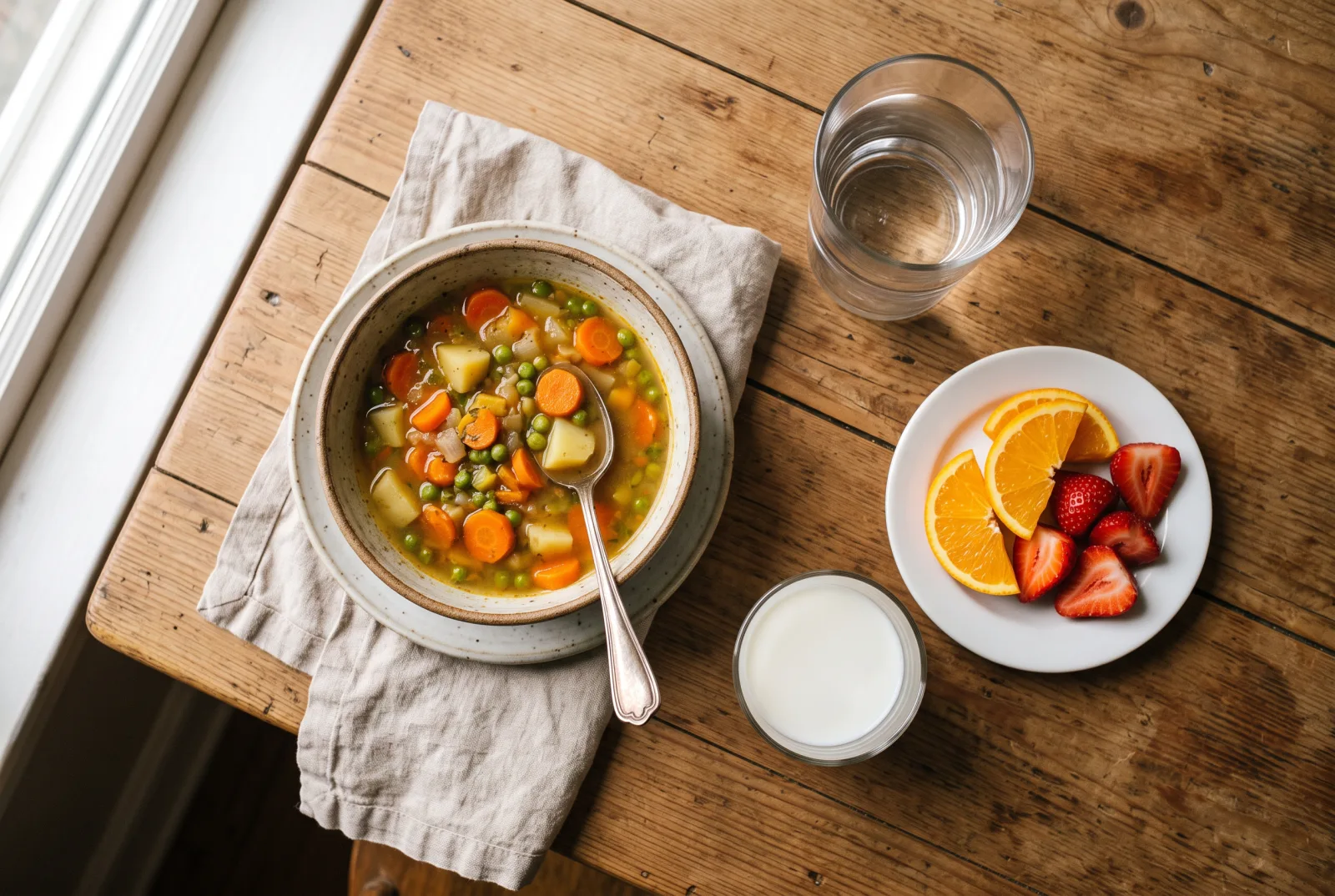
Why thirst can fade with age
For most healthy adults, thirst does a good job. But researchers have long observed that it can become less dependable as we get older.
The National Academies report notes that several studies confirm the long-held clinical observation that thirst and fluid intake are reduced in older adults. It also points out that the kidneys' ability to concentrate urine and conserve water declines with age.
One frequently cited study, published in the New England Journal of Medicine in 1984 by Phillips and colleagues, compared healthy, active men aged 67 to 75 with men aged 20 to 31 after 24 hours without water. The older men were less thirsty and drank less afterward, so their bodies didn't fully return to their starting balance. It was a small study, with seven men in each group, but it fits the broader research.
The National Institute on Aging puts it plainly in its guide to healthy eating after 50: with age, you might lose some of your sense of thirst, so don't wait until you feel thirsty to drink water or other fluids. MedlinePlus and the NHS both list older adults among the groups at higher risk of dehydration.
None of this means you need to force down large amounts. It just means that after 50, it's worth backing up thirst with a few steady habits.
Signs you may need more fluids
MedlinePlus, from the National Library of Medicine, lists these signs of mild to moderate dehydration:
- Thirst
- A dry or sticky mouth
- Not urinating much
- Darker yellow urine
- Dry, cool skin
- Headache
- Muscle cramps
The NHS adds feeling dizzy, lightheaded or unusually tired to the list, and offers a simple everyday check: drink enough during the day that your urine is a pale color.
More serious signs, such as very dark or amber urine or not urinating at all, confusion, dizziness, a rapid heartbeat or rapid breathing, need prompt medical attention.
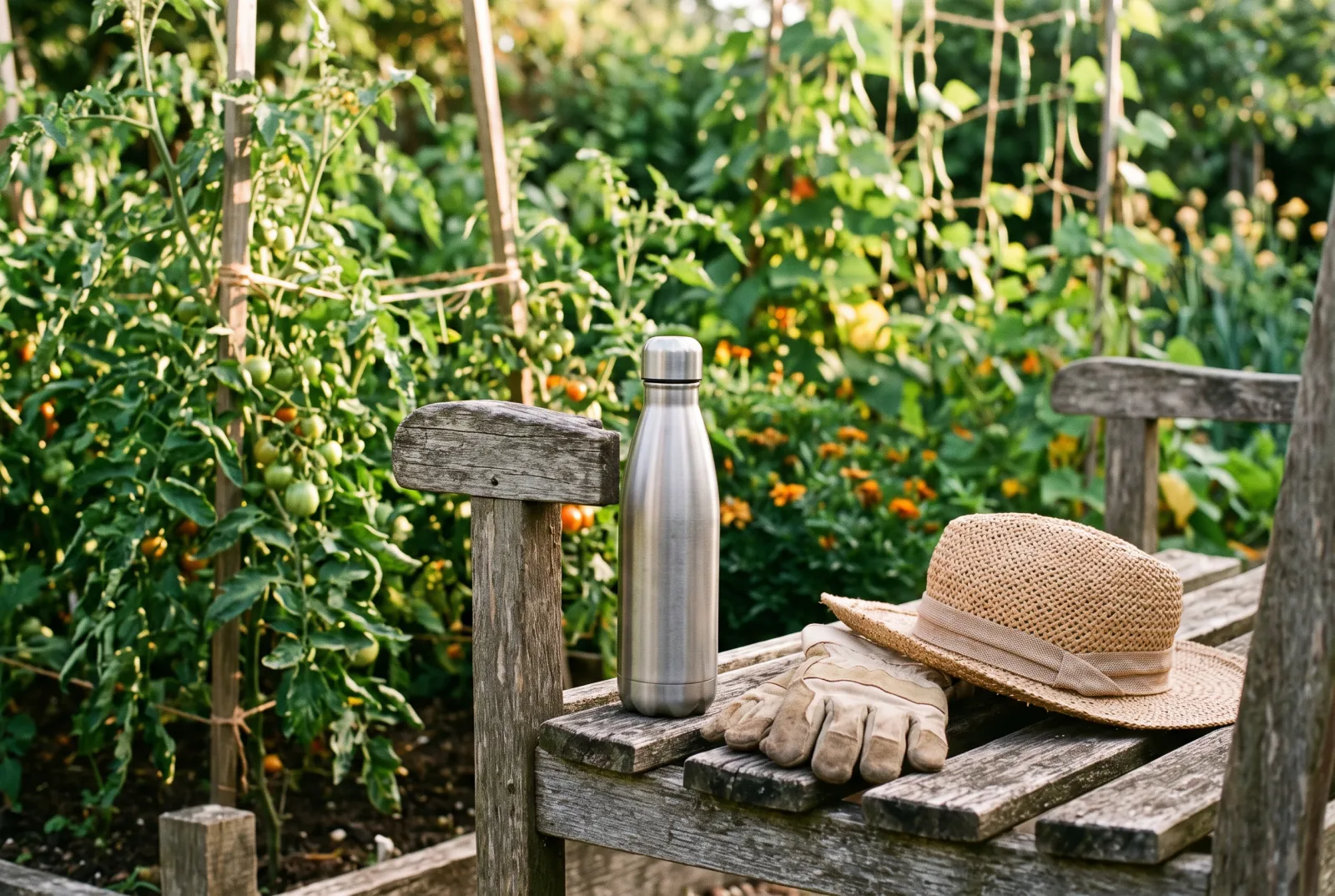
Simple habits that make it easier
- Drink with meals. The National Academies report notes that, day to day, thirst combined with drinking at mealtimes is what keeps most people's hydration on track.
- Pair water with routines. The National Institute on Aging suggests adding liquids throughout the day, such as a glass of water whenever you take your medicine.
- Count more than water. Coffee, tea, milk and broth all contribute. The Dietary Guidelines recommend choosing water and unsweetened drinks over sugar-sweetened ones.
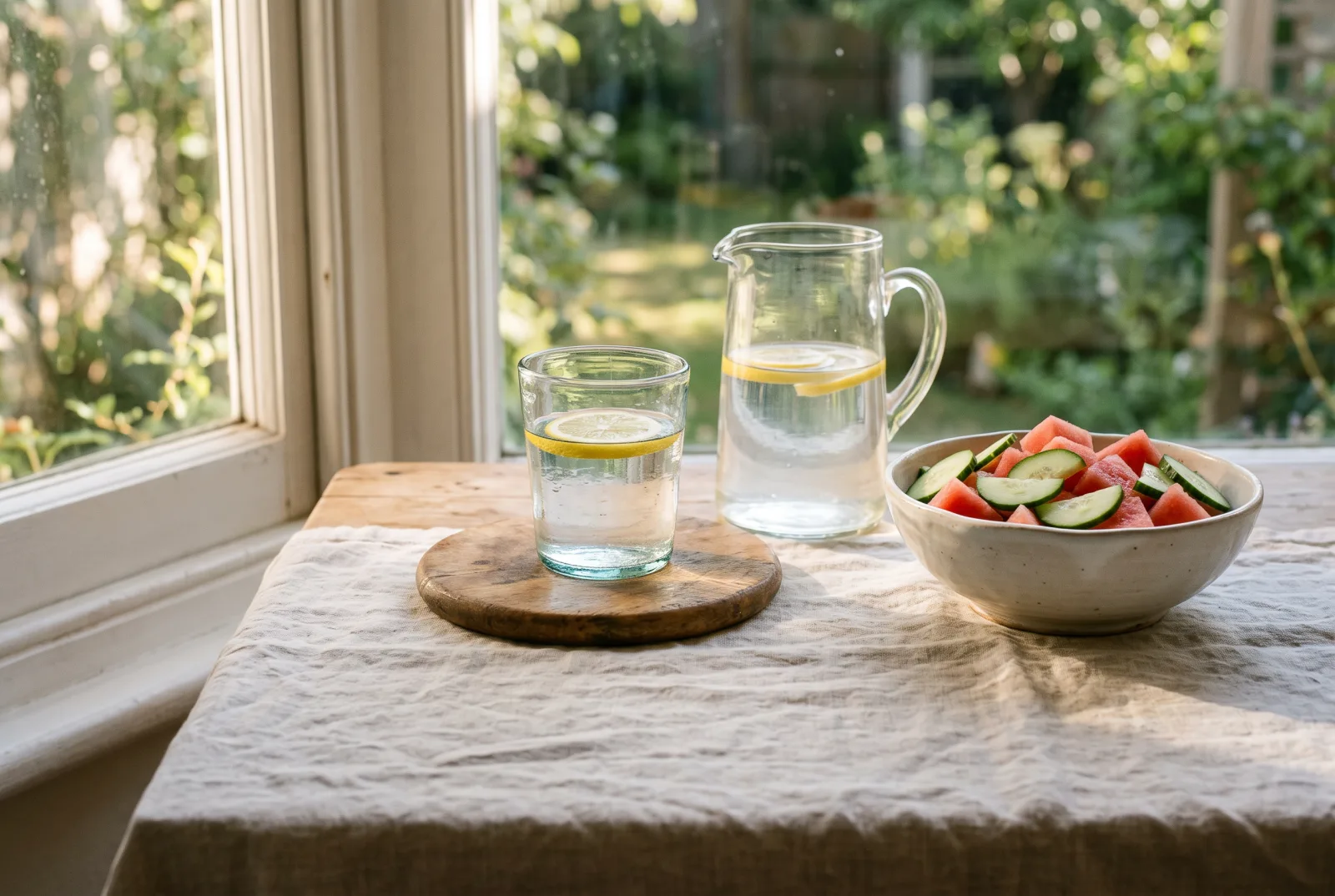
- Eat water-rich foods. According to USDA FoodData Central, raw watermelon is about 91% water and cucumber with the peel is about 95% water. Soups, fruits and vegetables all add up.
- Keep it visible. A glass on the counter or a bottle in your bag is a quiet reminder when thirst is quieter than it used to be.
- Plan ahead for heat and illness. The NHS advises drinking more when it's hot, when you're active and when you're unwell. In hot weather, the National Institute on Aging suggests plenty of liquids such as water or fruit and vegetable juices, and avoiding alcohol and caffeinated drinks.
- Follow your doctor's advice if you've been told to limit fluids. Some people need to restrict how much they drink for medical reasons. The National Institute on Aging suggests asking your doctor what to do on very hot days.
The short version: a quick checklist
- The National Academies' reference amounts are about 2.7 liters of total water a day for women and 3.7 liters for men, from all drinks and food, at every adult age.
- About 20% of that typically comes from food, and caffeinated drinks count.
- "Eight glasses a day" isn't from the official guidance, and a 2002 review found no scientific studies behind it.
- Thirst works well for most healthy people, but it can fade with age, so don't wait to feel thirsty.
- Watch for darker urine, a dry mouth, headaches and feeling dizzy or tired, and aim for pale urine.
- Drink with meals, keep water in sight, and drink more in heat, during activity and when you're sick, unless your doctor has told you otherwise.
Sources
- National Academies of Sciences, Engineering, and Medicine — Report Sets Dietary Intake Levels for Water, Salt, and Potassium to Maintain Health and Reduce Chronic Disease Risk (2004)
- Institute of Medicine — Dietary Reference Intakes for Water, Potassium, Sodium, Chloride, and Sulfate, Chapter 4: Water (2005)
- Valtin H — "Drink at least eight glasses of water a day." Really? Is there scientific evidence for "8 x 8"?, American Journal of Physiology, 2002
- Phillips PA, et al. — Reduced thirst after water deprivation in healthy elderly men, New England Journal of Medicine, 1984
- National Institute on Aging — AgePage: Healthy Eating After 50
- National Institute on Aging — Hot Weather Safety for Older Adults
- MedlinePlus, National Library of Medicine — Dehydration
- NHS — Dehydration
- U.S. Department of Agriculture and U.S. Department of Health and Human Services — Dietary Guidelines for Americans, 2025–2030
- U.S. Department of Agriculture, FoodData Central — Watermelon, raw and Cucumber, with peel, raw
This article is general information, not medical advice. Talk to your doctor before changing your diet, exercise or medication.