How Often Should You Really Replace Your Toothbrush?
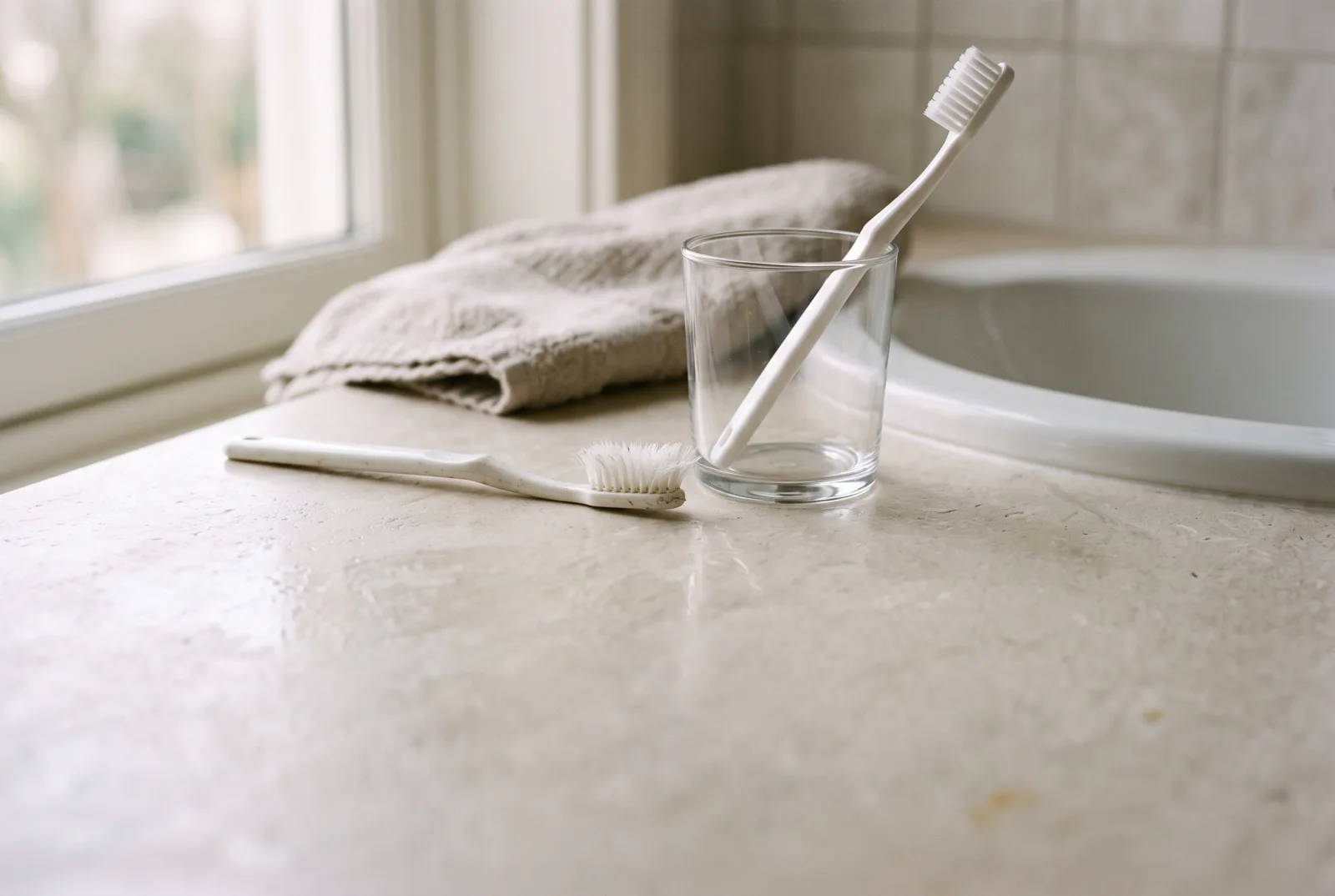
The American Dental Association says every three to four months, sooner if the bristles are frayed. In practice, the bristles are the better clock: a splayed brush cleans less well, whatever its age.
In this article
The American Dental Association's answer is short: replace your toothbrush every three to four months, or sooner if the bristles look matted or frayed.
The part that's easy to skip is the "or sooner." The calendar is only a backstop. What actually tells you a brush is finished is the bristles, and research on worn brushes suggests that's the more useful thing to watch. Here's what the guidance says, why it matters, and a simple routine that keeps it from slipping.
What the dental guidelines actually say
The ADA's guidance on toothbrushes says to "replace toothbrushes every three to four months or more often if the bristles are visibly matted or frayed," and explains why in one line: "The effectiveness of the brush decreases as the bristles become worn."
The ADA's consumer site, MouthHealthy, puts it more plainly: "A worn toothbrush won't do as good of a job cleaning your teeth."
Three to four months is the outer limit. A brush can wear out faster, and when it does, change it whatever the calendar says.
Why worn bristles really matter
It's easy to assume a toothbrush works the same until it falls apart. A 2019 study suggests otherwise.
Researchers in the Netherlands (Van Leeuwen and colleagues, published in the International Journal of Dental Hygiene) looked at 172 people who all followed the same routine for a year: brushing two minutes, twice a day, with fluoride toothpaste. Every three months, participants turned in their brushes, and the researchers scored how worn they were.
Two findings stand out:
- Wear varied a lot from person to person, but was consistent for each person. Some people turned in brushes with little or no visible wear after three months; others turned in heavily worn ones, time after time.
- People whose brushes showed extreme wear had significantly higher plaque scores than people whose brushes showed no wear or only light wear.
The authors concluded that bristle splaying is a better guide to when to replace a brush than its age, and that outer tufts splayed beyond the base of the brush mean it's time for a new one.
A 10-second bristle check
Look at the brush head from the side and from above:
- Do the outer tufts flare out past the edge of the plastic head?
- Are the bristles bent, flattened or matted together?
Any "yes" means the brush has done its job. Replace it.
If your brushes always look flattened long before the three-month mark, you may be pressing harder than you need to. The ADA's advice is not to scrub vigorously, only brush hard enough to clean the film off your teeth, and to choose soft bristles, because firm or even medium-strength bristles may damage gums and enamel. It's worth mentioning to your dentist at your next visit.
How to store your toothbrush between uses
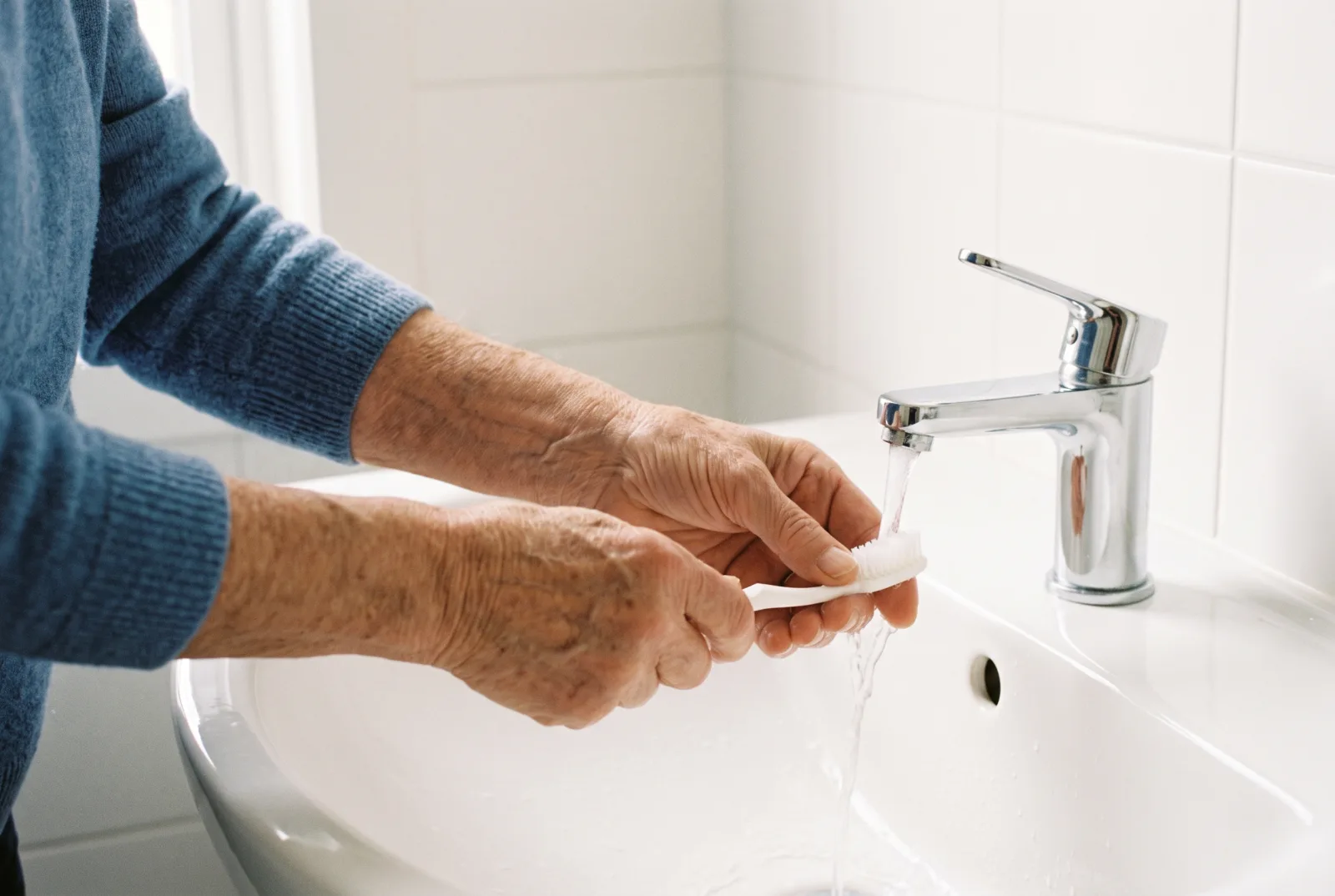
How you keep a brush between uses matters too. The ADA's storage advice comes down to a few habits:
- Rinse it with tap water after brushing to remove leftover toothpaste and debris.
- Store it upright and let it air-dry.
- Don't routinely cover it or keep it in a closed container. MouthHealthy explains that a moist environment like a closed container is more conducive to the growth of unwanted bacteria than the open air. The key word is "routinely": the advice is about where a wet brush lives day to day.
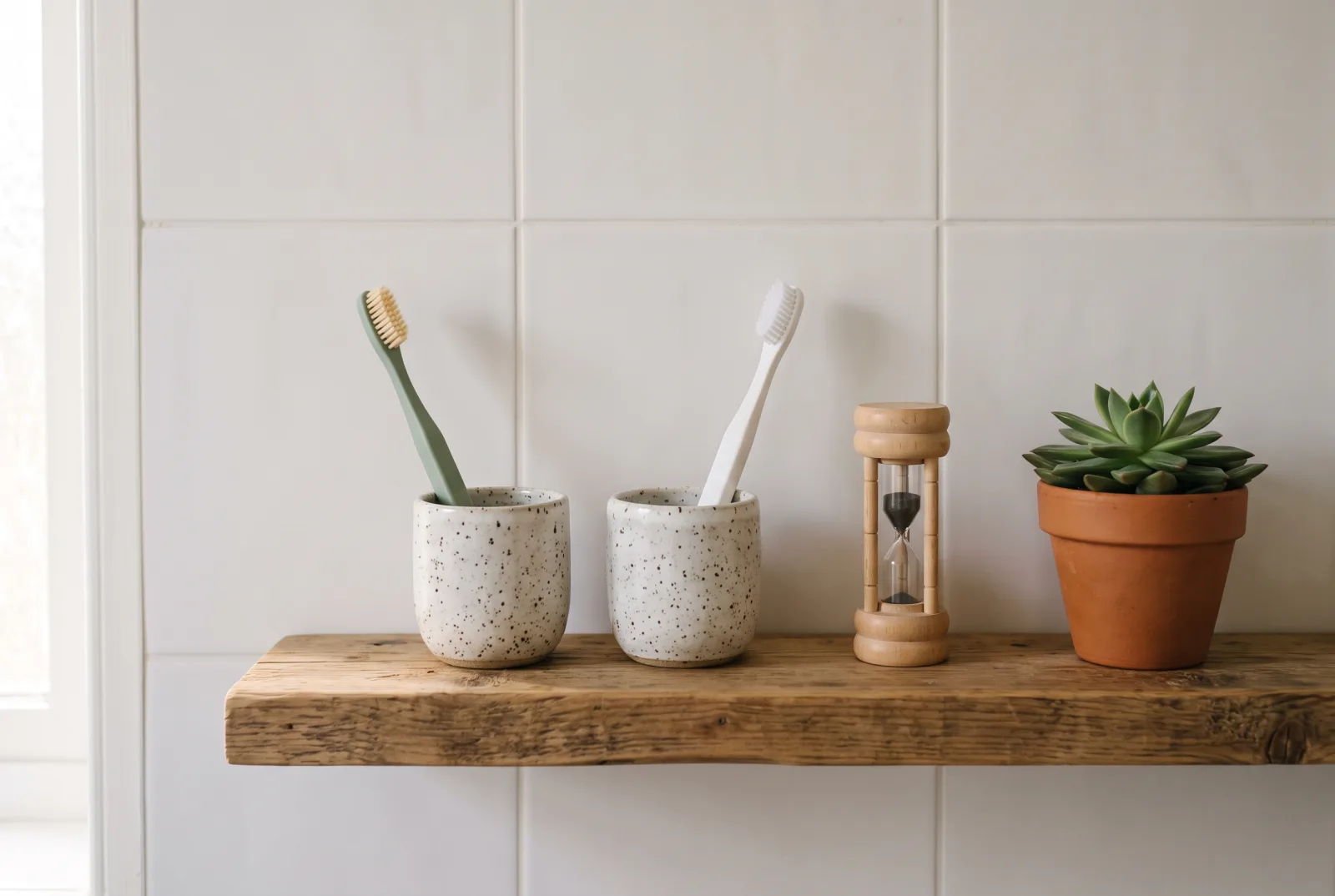
- Keep it apart from other brushes. If several toothbrushes share a holder, MouthHealthy says to make sure they're separated to prevent cross-contamination.
- Don't share it. Sharing a toothbrush can mean sharing germs and bacteria, which MouthHealthy notes is a particular concern if you have a cold or flu, or a condition that weakens your immune system.
Some perspective: the ADA notes that toothbrushes have been shown to harbor bacteria, but that there is no evidence these bacteria cause adverse health effects. If you like to sanitize your brush anyway, the ADA advises against the microwave or dishwasher, since high heat may damage it.
Electric brush heads and other questions
Electric brushes
The ADA says manual and powered toothbrushes can both clean teeth effectively; which one you use is largely a matter of preference. It also notes that people with dexterity problems may find a powered brush easier to use, and MouthHealthy's advice for adults over 60 suggests trying an electric toothbrush if arthritis or another condition limits your movement.
The ADA's replacement guidance is written about toothbrushes in general, and its consumer pages don't set a separate schedule for electric brush heads. The reasoning still carries over: the bristles do the cleaning, so check the head the same way you'd check a manual brush, swap it on roughly the same three-to-four-month rhythm, and sooner if it's splayed. Your brush's instructions may also give an interval. Whichever type you use, MouthHealthy recommends soft bristles.
After a cold or the flu
This is one of the most common toothbrush questions, and the answer may be a relief. According to MouthHealthy, you probably don't need to replace your toothbrush after you've been sick. Unless your immune system is severely compromised, the chances of reinfecting yourself are very low.
The same article adds a practical rule of thumb: if you're still in doubt, throw it out, especially if the brush is already three to four months old and due for replacing anyway. And while you're sick, the "don't share" rule matters most.
Making the routine stick
A fresh brush only helps if you use it well. The ADA's everyday basics:
- Two minutes, twice a day. The ADA recommends brushing for two minutes twice daily with a fluoride toothpaste, and notes that brushing for two minutes has been shown to achieve clinically significant plaque removal. MouthHealthy's shorthand: "2 minutes, 2 times a day." The UK's National Health Service adds that one of those times should be last thing before bed.
- Soft bristles, small head. MouthHealthy's advice for adults over 60 is a soft-bristled brush with a small head to reach the hard-to-reach areas.
- Gentle technique. Hold the brush at a 45-degree angle to the gums and move it back and forth in short, tooth-wide strokes, covering the outer, inner and chewing surfaces.
- Clean between your teeth once a day, with floss or another between-the-teeth cleaner.
It also helps to know why this keeps mattering as the years go by. MouthHealthy notes that even if it's been years since your last cavity, the risk of cavities increases with age, partly because dry mouth is a common side effect of many prescription medications. Your dentist can tell you whether anything about your own routine should change.
Ways to remember
The hardest part of a three-month habit is remembering it:
- Change it with the seasons. Four a year works out to one new brush about every three months.
- Note the start date on the calendar or in your phone.
- Keep a spare on hand, so a splayed brush gets replaced the day you notice it.
The short version
- Replace your toothbrush every three to four months, per the ADA, and sooner if the bristles are frayed, matted or splayed.
- Trust the bristles over the calendar: in one study, heavily worn brushes went with higher plaque scores.
- Rinse, store upright, let it air-dry, and don't routinely cover it or keep it in a closed container.
- Keep brushes apart, and don't share.
- Electric brush heads: check and replace them the same way.
- After a cold: you probably don't need a new brush, but if it's due anyway, swap it.
- Brush two minutes, twice a day, with a soft brush and fluoride toothpaste, and clean between your teeth daily.
Sources
- American Dental Association — Toothbrushes
- American Dental Association, MouthHealthy — Toothbrushes
- American Dental Association, MouthHealthy — Brushing Your Teeth
- American Dental Association, MouthHealthy — Healthy Teeth and Gums: Adults Over 60
- American Dental Association, MouthHealthy — Cold and Flu Season
- Van Leeuwen MPC, Van der Weijden FA, Slot DE, Rosema MAM — Toothbrush wear in relation to toothbrushing effectiveness, International Journal of Dental Hygiene, 2019
- National Health Service (UK) — How to keep your teeth clean
This article is general information, not medical advice. Talk to your doctor before changing your diet, exercise or medication.