Foot Care Basics That Are Easy to Skip After 50
Feet change with age, but the care they need stays simple: a regular look, careful drying between the toes, moisturizer in the right places, nails cut straight across, and shoes fitted to the feet you have now.
In this article
Feet are usually the last part of the body to get any attention, and after 50 that starts to matter. Podiatry advice from the UK's National Health Service notes that skin on older feet tends to thin and lose its elasticity, and the American Podiatric Medical Association (APMA) points out that natural aging can change the size of your feet.
The routine that keeps feet comfortable is short and unglamorous: look at them regularly, wash and dry them carefully (especially between the toes), moisturize the right places, cut nails straight across, and wear shoes and socks that fit the feet you have today. As one NHS podiatry service puts it, painful and uncomfortable feet aren't a natural part of growing older or something you have to put up with.
Why feet need more care later
A few changes make the basics more important as the years go by:
- Skin changes. According to the NHS Rotherham Doncaster and South Humber (RDaSH) podiatry service, the skin on older feet tends to thin and lose elasticity, healing can take longer, and years of wear on the joints can create pressure points where hard skin builds up.
- Size changes. The APMA says natural aging and health changes can cause the size of your feet to change, which is why last decade's shoe size may no longer be right.
- Steadiness. The National Institute on Aging (NIA) lists foot problems that cause pain, and unsafe footwear such as backless shoes or high heels, among the things that can raise the risk of falling.
A simple daily foot routine
Take a regular look
The National Library of Medicine's MedlinePlus guide to foot health starts with "Examine your feet regularly." After a bath or shower is an easy time. You're simply looking for anything new: a blister, a cut, a red or sore spot, hard skin building up, or a change in your nails.
If bending down is awkward, the NHS podiatry advice suggests sitting on a chair and resting your foot on a second, towel-covered chair opposite you, bending your knee up if you can, so your foot comes closer instead of you leaning down to it.
Wash, then dry between the toes
MedlinePlus advises washing your feet daily with soap and lukewarm water. The NHS podiatry service adds a caution: don't soak them for more than 10 minutes, because long soaks can reduce the skin's natural oils and leave it dry.
Then dry them thoroughly, and give the spaces between your toes the most attention. If your skin is fragile, the same NHS advice suggests gently dabbing between the toes with a tissue rather than rubbing, which avoids grazing the skin and lowers the chance of infection.
Moisturize, but not between your toes
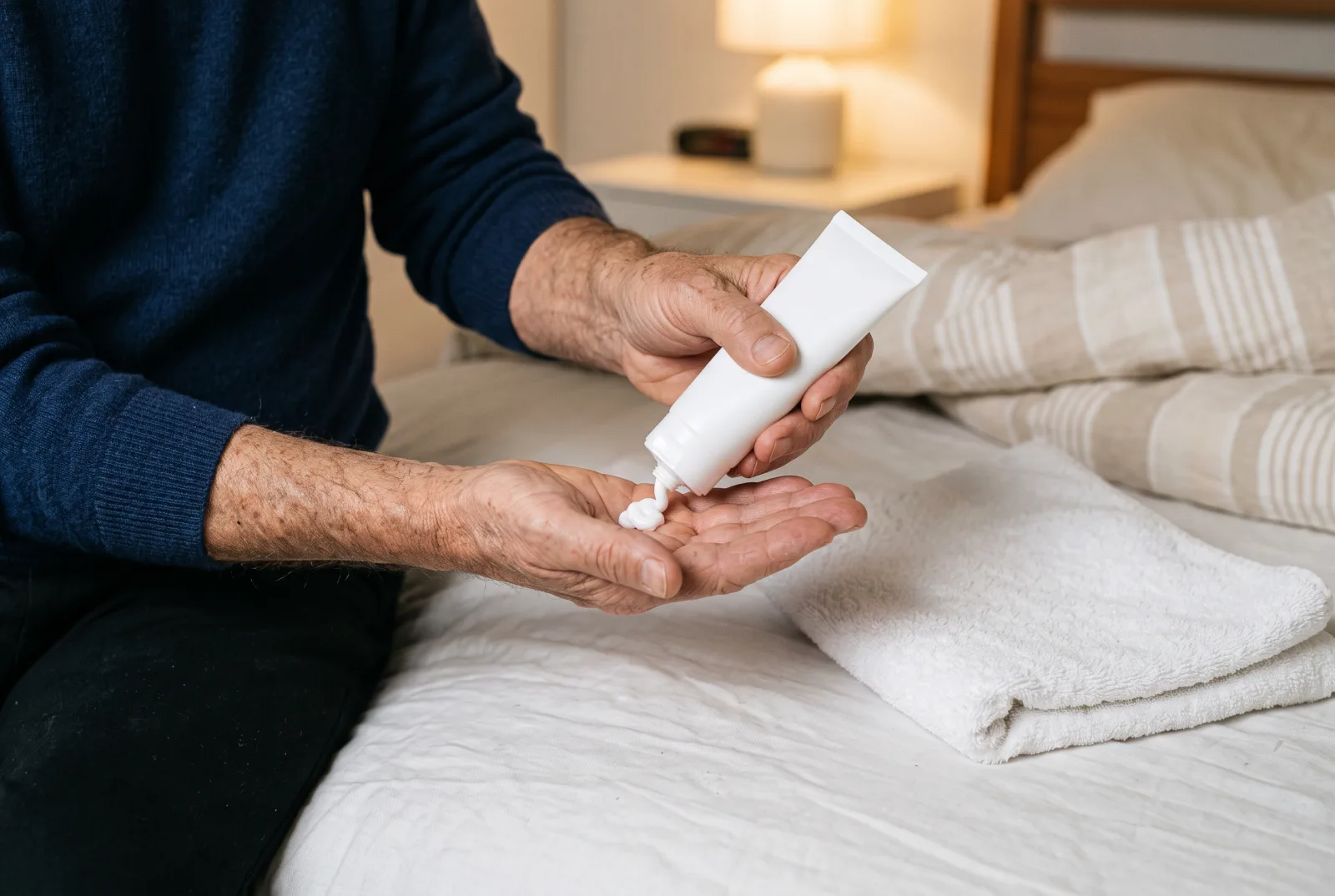
If the skin on your feet is dry, the NHS podiatry service recommends a moisturizing cream every day, with one firm rule: don't apply it between your toes. That area should be washed regularly and dried carefully, because, as the service explains, otherwise dead skin can build up there and hold excess moisture, which weakens the skin. The APMA likewise recommends moisturizer to keep the soles soft.
Trimming toenails the safer way
Nail trimming is where small mistakes cause the most trouble. The advice from MedlinePlus, the APMA and NHS podiatrists lines up:
- Cut straight across, and not too short. Don't cut down into the corners or round them off; NHS and APMA guidance both link that to ingrown toenails.
- Use the right tool. The APMA recommends a toenail clipper with a straight edge and warns that manicure scissors or fingernail clippers, with their small, curved shape, increase the risk of ingrown toenails.
- Smooth the edges with an emery board, filing lightly in one direction.
- Consider filing instead of cutting. The NHS podiatry service calls filing a safer option, especially if your nails tend to be thick, and suggests a long-handled file worked gently in one direction, away from you.
- Don't cut at hard skin or corns. The same NHS advice warns against using sharp instruments such as razor blades on them, and suggests gently rubbing hard skin with a pumice stone or foot file instead, avoiding any spot over a joint or bony area.
Shoes and socks for today's feet
Get measured, late in the day
The APMA's footwear advice for older people is to have your feet professionally measured every time you shop for shoes, to measure both feet late in the day, and to buy for the larger foot. The NHS podiatry service says the same about timing: the best time to shop for shoes is the afternoon, so they'll fit throughout the whole day.
A few more points from the APMA:
- Bring the socks you'll wear with the shoes, and walk around the store before you buy.
- Trust the first impression. If you don't feel comfortable and steady in the store, don't buy them. Shoes should feel supportive right away; breaking them in won't fix a poor fit.
- Try the 1-2-3 test. Press both sides of the heel to check it's stiff and won't collapse. Bend the shoe to check it flexes a little at the toes, but not too much. Then try twisting it: it shouldn't twist in the middle.
What to look for in a shoe
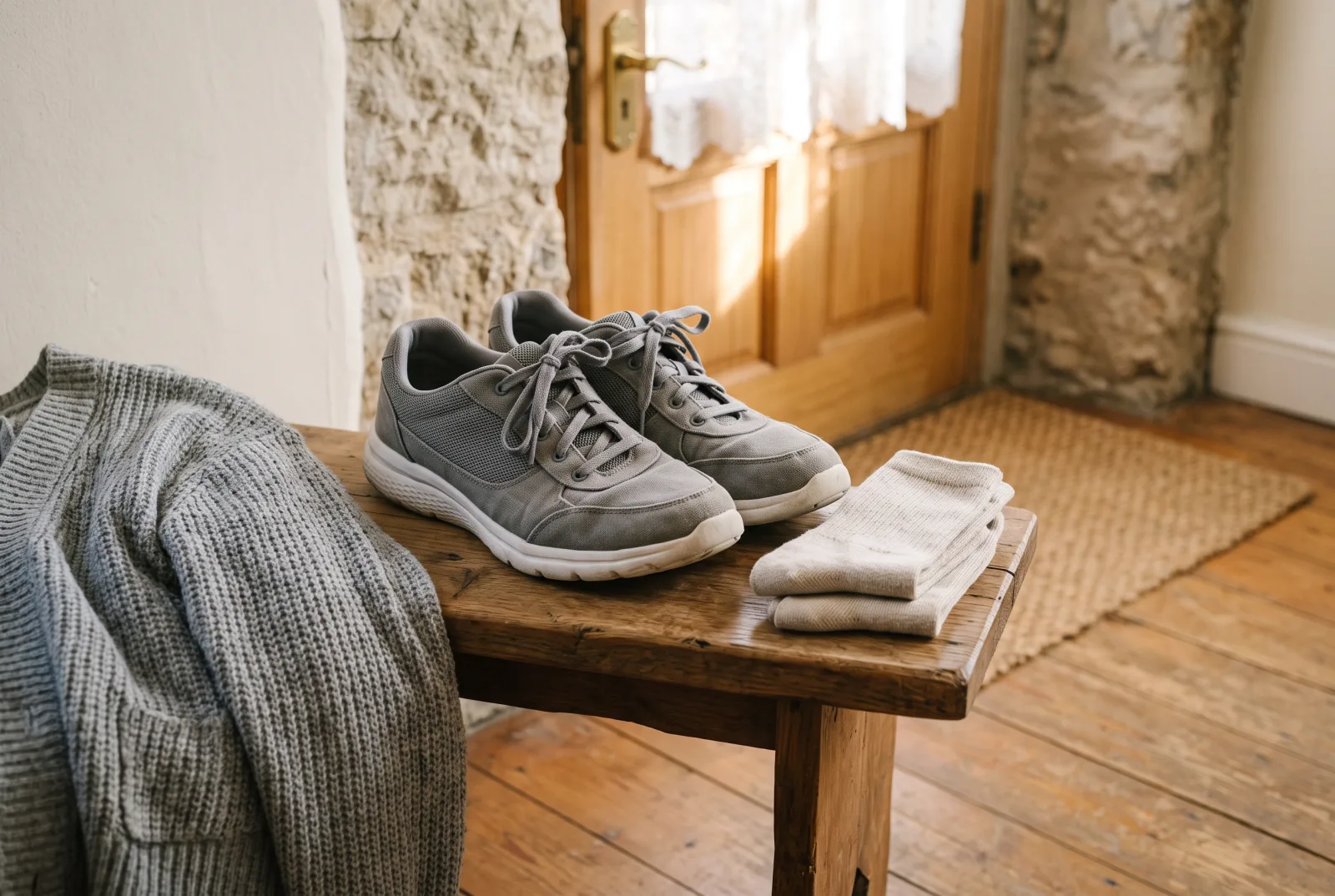
The NIA recommends nonskid, rubber-soled, low-heeled shoes. The NHS podiatry service adds that laces, Velcro or a buckle hold the foot more firmly than a slip-on, that your heel should be held firmly in place, and that there should be room for your toes to wiggle. It also notes that the size printed on the shoe matters less than how it feels.
Around the house, the NIA advises against walking on floors or stairs in socks, or in shoes and slippers with smooth soles. The NHS podiatry service warns that loose, sloppy slippers can increase the risk of falls; if you wear slippers, it suggests a closed style with a Velcro fastening.
Socks matter too
The NHS podiatry service's sock advice is simple:
- Change them every day.
- Choose cotton or wool over synthetic fabrics, because they absorb perspiration and allow for swelling.
- Avoid anything too tight, and be careful with tight elastic tops if your ankles or feet tend to swell.
- Retire socks with holes, and don't wear shoes without socks or tights, which the service says makes corns, calluses and blisters from friction more likely.
Keep your feet moving

Feet are built to be used. The NHS podiatry service encourages older adults to keep on the move: a daily walk, or simple chair exercises such as heel-to-toe tapping and marching in place, help keep circulation moving. It also suggests keeping your feet warm in cooler months, with natural-fiber socks rather than anything tight.
When to see a podiatrist
See a podiatrist or your doctor if you notice changes in your nails or skin, if your feet hurt, or if it's becoming hard to look after them yourself, for example if your nails have become difficult to cut.
The short version
- Look at your feet regularly, sitting down if that's easier.
- Wash daily in lukewarm water, without long soaks.
- Dry thoroughly, especially between the toes.
- Moisturize dry skin daily, but never between the toes.
- Cut nails straight across, not too short, with a straight-edged clipper, or file them.
- Get measured late in the day, buy for the larger foot, and choose shoes that feel steady right away.
- Pick low-heeled, rubber-soled shoes that fasten, and clean cotton or wool socks daily.
- Keep walking, and get any changes or pain checked.
Sources
- American Podiatric Medical Association — Balance-Boosting Footwear Tips for Older People
- American Podiatric Medical Association — Pedicure Pointers
- National Library of Medicine, MedlinePlus — Foot Health
- National Institute on Aging — Falls and Fractures in Older Adults: Causes and Prevention
- Rotherham Doncaster and South Humber NHS Foundation Trust — Ageing feet
- Rotherham Doncaster and South Humber NHS Foundation Trust — Looking after your feet
- Rotherham Doncaster and South Humber NHS Foundation Trust — Your shoes and you
This article is general information, not medical advice. Talk to your doctor before changing your diet, exercise or medication.