How Much Activity Do Adults Over 65 Really Need?

The CDC's answer for adults 65 and older: 150 minutes of moderate activity a week, muscle-strengthening on two or more days, plus balance work. Short bouts count, and some activity beats none.
In this article
Ask around about how much exercise you need after 65 and you may hear many different answers. The official one is clearer than you might expect. According to the CDC, adults 65 and older need, every week, at least 150 minutes of moderate-intensity aerobic activity, such as brisk walking; muscle-strengthening activities on at least two days; and activities that improve balance.
If 150 minutes sounds like a lot, it works out to 30 minutes a day, five days a week, or about 22 minutes a day. Under the current federal guidelines, activity in bouts of any length adds up, and some activity is better than none.
The weekly target in plain numbers
Here is what the CDC recommends for adults 65 and older each week:
- Aerobic activity: at least 150 minutes at moderate intensity, or 75 minutes at vigorous intensity, or an equivalent mix of the two.
- Muscle strengthening: at least two days a week of activities that work all the major muscle groups.
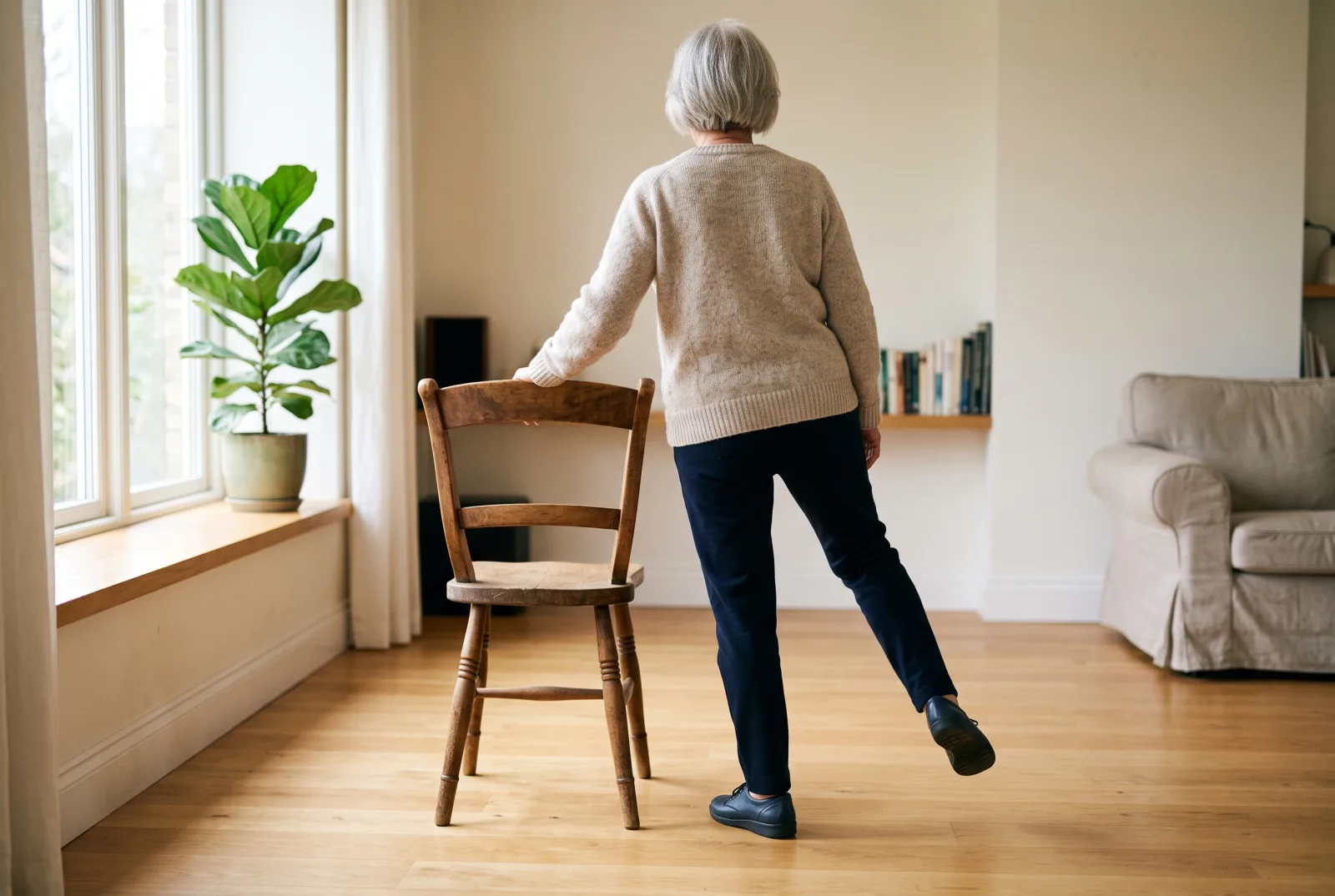
- Balance: activities such as walking heel-to-toe or standing up from a sitting position.
When you mix intensities, the CDC's rule of thumb is that one minute of vigorous activity counts about the same as two minutes of moderate activity. So a 15-minute jog is roughly equal to a 30-minute brisk walk.
The federal Physical Activity Guidelines for Americans, the source of the CDC's recommendations, set 150 to 300 minutes of moderate activity a week as the target range, with extra benefits beyond that. They suggest spreading activity over at least three days a week, which may help reduce the risk of injury and excessive tiredness.
The guidelines make another point worth hearing. Adults 65 and older are the least physically active of any age group, but it is never too late to start.
What "moderate" feels like: the talk test
You don't need a heart rate monitor. The CDC suggests a simple 0-to-10 scale, where sitting is 0 and working as hard as you can is 10:
- Moderate intensity is a 5 or 6. You breathe harder and your heart beats faster. You can still talk, but you couldn't sing the words to your favorite song.
- Vigorous intensity is a 7 or 8. You're breathing hard, and you can't say more than a few words without stopping to catch your breath.
This is called the talk test, and it suits older adults well. The federal guidelines explain that older adults use more energy than younger adults for the same task, such as walking, so effort relative to your own fitness is a better guide than a fixed measure like speed. As the CDC puts it, walking may feel moderate to one person and vigorous to another.
If you'd like a rough benchmark anyway, the CDC lists brisk walking at 2.5 miles per hour or faster as a moderate-intensity activity.

What counts toward your minutes
A lot more than formal exercise. Between the CDC and the National Institute on Aging (NIA), the lists of aerobic activities that can count include:
- Brisk walking, hiking, or walking to the store
- Mowing the lawn or raking leaves
- Housework such as mopping or vacuuming
- Dancing, including learning a new dance
- Swimming or a water aerobics class
- Riding a bike, indoors or out
- Climbing stairs or hills
- Doubles tennis or pickleball
Whether each is moderate or vigorous depends on your effort; let the talk test decide.
Short bouts count. Older guidelines said activity had to come in chunks of at least 10 minutes to count. The 2018 federal guidelines dropped that requirement after reviewing the evidence, concluding that bouts of any length contribute to the health benefits of your weekly total. Even climbing a few flights of stairs counts.
Walking deserves a special mention. The federal guidelines say older adults should strongly consider it, because it has many health benefits and a low risk of injury.
Sitting less helps, too. The guidelines advise adults to move more and sit less throughout the day, and the NIA suggests avoiding sitting for long periods.
Strength and balance count, too
Aerobic minutes are only part of the picture. The federal guidelines call for a weekly mix that includes balance training as well as aerobic and muscle-strengthening work.
Muscle strengthening, two days a week
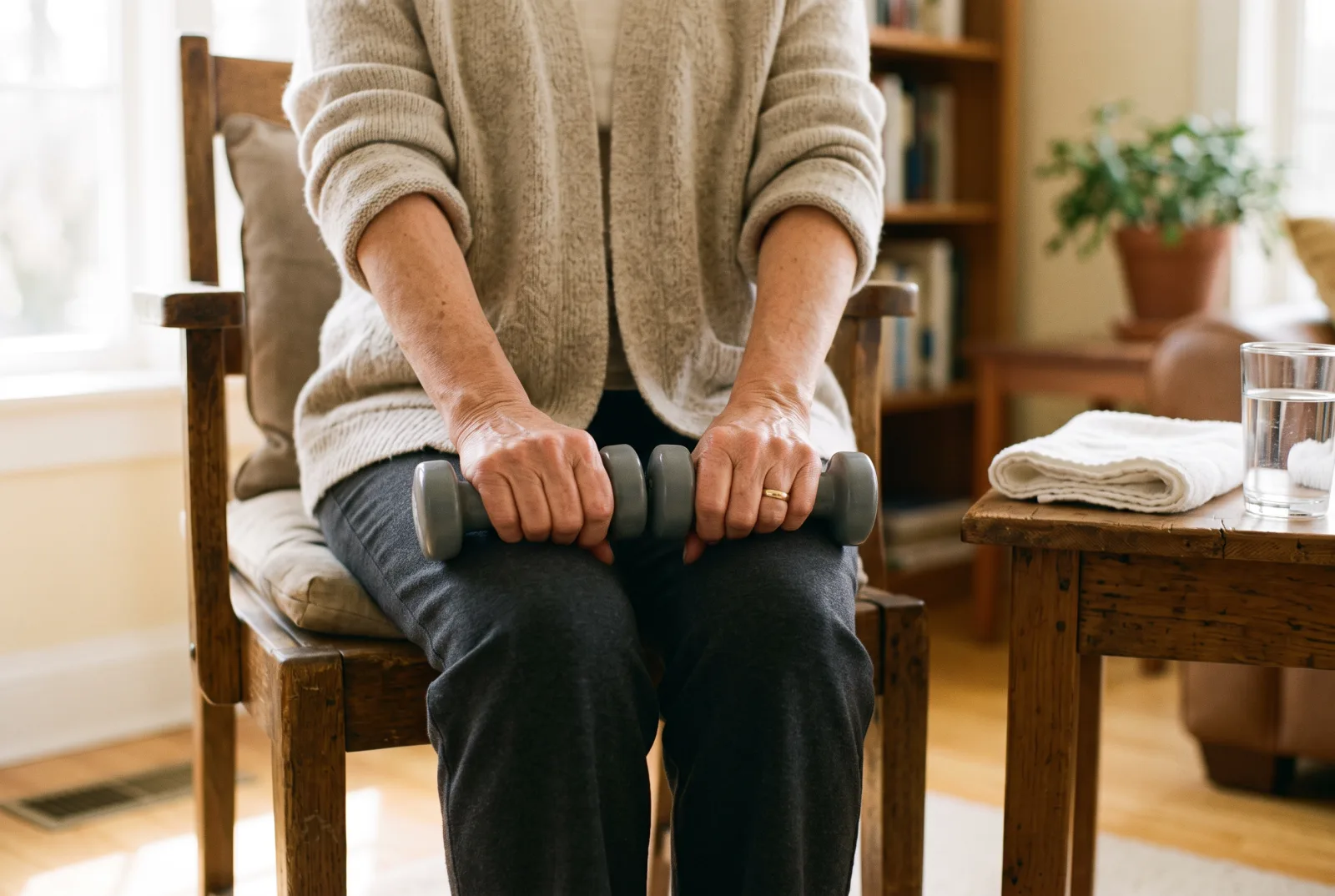
The CDC recommends doing muscle-strengthening activities on at least two days a week, working the legs, hips, back, chest, abdomen, shoulders and arms. Do each activity to the point where it's hard to do another repetition without help. Eight to 12 repetitions make one set. At least one set is helpful, and two or three sets bring more benefits.
Options include lifting weights, working with resistance bands, body-weight exercises such as push-ups or sit-ups, digging in the garden, and some yoga postures. Carrying heavy groceries counts as well. The NIA recommends not working the same muscle group on two days in a row, so your muscles have time to recover.
One detail worth knowing: under the federal guidelines, muscle-strengthening activities generally don't count toward your aerobic minutes.
Balance, briefly
Balance work can be simple: walking heel-to-toe, standing on one leg, or practicing standing up from a chair. The NIA suggests aiming for about three sessions a week. Activities such as tai chi, yoga, gardening and many sports combine more than one type of activity, so they can count toward several goals at once.
If 150 minutes feels out of reach
The CDC's advice for anyone who has trouble meeting the guidelines is to be as physically active as your abilities and conditions allow, and to remember that some activity is better than none. Health benefits increase the more you do, and the NIA notes that even light-intensity movement can be beneficial.
A few practical pointers from the CDC and NIA:
- Build up gradually. Start where you are and add minutes over time. After a break for illness or travel, the CDC suggests restarting at a lower level.
- Check in with your doctor when it makes sense. Moderate activity is safe for most people, but the CDC suggests talking to your doctor before starting vigorous activity if you've been inactive or have concerns, and working with your doctor on a plan if you have a health condition.
- Listen to your body. The NIA says aerobic activity shouldn't cause dizziness, chest pain or pressure, or nausea. Warm up and cool down with easy walking, and drink water when you sweat.
What a week might look like
Here's one illustrative way to fit everything in:
- Monday, Wednesday, Friday: a 30-minute brisk walk, plus a few minutes of balance practice afterward
- Tuesday and Thursday: a 20-minute brisk walk and a strength session with bands or hand weights
- Saturday: 30 minutes of raking, mowing or other yard work
That adds up to 160 minutes of moderate activity, two strength days and three balance sessions. Swap in whatever you enjoy: the CDC notes that variety can make activity more enjoyable and reduce your risk of injury.
The short version
- Aerobic: 150 minutes a week of moderate activity, or 75 of vigorous, or a mix.
- Strength: at least two days a week, working all the major muscle groups.
- Balance: a few sessions a week of simple balance practice.
- Use the talk test: moderate means you can talk but not sing.
- Everything adds up: short bouts, yard work and housework all count.
- Some is better than none: do what your abilities allow, and build from there.
Sources
- Centers for Disease Control and Prevention — Older Adult Activity: An Overview
- Centers for Disease Control and Prevention — What Counts as Physical Activity for Older Adults
- Centers for Disease Control and Prevention — Older Adults: Adding Activity Recommendations
- Centers for Disease Control and Prevention — How to Measure Physical Activity Intensity
- U.S. Department of Health and Human Services — Physical Activity Guidelines for Americans, 2nd edition
- National Institute on Aging — Three Types of Exercise Can Improve Your Health and Physical Ability
This article is general information, not medical advice. Talk to your doctor before changing your diet, exercise or medication.