How Much Sleep Do Adults Over 60 Need?

Adults over 60 need about as much sleep as younger adults, at least 7 hours a night, according to the CDC and NIA. What changes with age is the pattern: earlier, lighter sleep with more awakenings.
In this article
It's a common belief that we need less sleep as we get older. The official guidance says otherwise. According to the CDC, adults aged 61 to 64 should aim for 7 to 9 hours of sleep a night, and adults 65 and older for 7 to 8 hours. The National Institute on Aging (NIA) puts it simply: older adults need about the same amount of sleep as all adults, seven to nine hours each night.
What does change with age is the shape of sleep. Many people find they get sleepy earlier in the evening, wake earlier in the morning, sleep more lightly and wake up more often during the night. Understanding those changes, and which ones are normal, makes it easier to set up habits that help.
What the official guidelines say
The CDC's age-based recommendations for adults look like this:
- Ages 18 to 60: 7 or more hours
- Ages 61 to 64: 7 to 9 hours
- Age 65 and older: 7 to 8 hours
The figures come from two expert panels. The "7 or more hours" for adults up to age 60 is from a 2015 consensus statement by the American Academy of Sleep Medicine (AASM) and the Sleep Research Society, which concluded that adults should sleep 7 or more hours per night on a regular basis to promote optimal health. The ranges for ages 61 and up come from the National Sleep Foundation's 2015 recommendations, developed by an 18-member panel of experts, which set 7 to 9 hours for adults and 7 to 8 hours for older adults (65 and up).
Notice what all of these have in common: 7 hours is the floor. Whether you read the CDC's ranges or NIA's, the recommended minimum for older adults is the same 7 hours it is for younger adults.
The panels also stress that these are guides, not exact prescriptions. The National Sleep Foundation's panel noted that sleep needs vary from person to person and that durations somewhat outside the recommended range may be appropriate, though straying far from it is rare. The AASM statement adds that people concerned they're sleeping too little or too much should talk with their health care provider.
Do older adults need less sleep?
The short answer from NIA is no: the need stays about the same. What researchers do see is that sleep itself changes over the adult years.
A 2004 analysis led by Maurice Ohayon pooled 65 studies that measured sleep objectively in 3,577 healthy people aged 5 to 102. Across adulthood, total sleep time, deep sleep and the share of time in bed actually spent asleep (sleep efficiency) all declined with age. Meanwhile, the time it took to fall asleep, the amount of light sleep and time spent awake during the night all increased.
But here's the encouraging part. In that analysis, only sleep efficiency kept declining significantly after age 60. A 2018 review of sleep in normal aging reached a similar conclusion: most age-related changes happen between young adulthood and middle age, and in healthy older adults, sleep remains largely stable after about 60.
So the bigger shifts have usually already happened by the time you reach your 60s. Sleeping a bit differently than you did at 30 is common. A sudden change is worth mentioning to your doctor.
How sleep patterns change with age
Here are the main changes that NIA and sleep researchers describe, and why they happen.
Earlier to bed, earlier to rise
NIA notes that older adults tend to go to bed earlier and wake earlier than younger adults. Part of the reason is the body clock. The 2018 aging review reports that daily rhythms in body temperature and in the hormones melatonin and cortisol run about an hour earlier in older people than in young adults.
The National Heart, Lung, and Blood Institute (NHLBI) adds that the body clock's rhythm and timing change with age, and that some of the brain cells that promote sleep are lost as part of normal aging. Lifestyle plays a part, too: NHLBI notes that less physical activity and less time spent outdoors also affect circadian rhythms.
Lighter sleep and more awakenings
According to NIA, sleep tends to become shorter and lighter with age, the time spent in each type of sleep decreases, and you may wake up more often during the night. The 2018 aging review counts more nighttime awakenings among the changes of normal aging.
More napping
The aging review notes that daytime napping becomes more common with age. It also points out that retirement can bring more flexible schedules, which can become irregular, along with more chances to nap and less daytime activity, all of which can affect both the body clock and the drive to sleep at night.
Other influences
NIA notes that older adults are also more likely to take medications and have medical conditions that affect sleep. That's one reason it's worth mentioning sleep changes to your doctor rather than assuming they're just part of getting older.
Habits that support a good night's sleep
NIA and the CDC offer practical tips that apply at any age:
- Keep a regular schedule. NIA recommends going to sleep and getting up at the same time each day, even on weekends or when traveling.
- Have a bedtime routine. NIA suggests winding down the same way each night, such as reading a book, listening to soothing music or taking a warm bath.
- Make the bedroom comfortable. The CDC recommends keeping it quiet, relaxing and at a cool temperature.
- Stay active, at the right time. NIA advises regular exercise, but not within three hours of bedtime.
- Get outside in the daytime. NHLBI recommends spending time outside every day when possible. According to the National Institute of General Medical Sciences, light and dark have the biggest influence on the body clock.
- Avoid late naps. NIA suggests avoiding naps in the late afternoon or evening.
- Watch caffeine and alcohol. NIA advises avoiding caffeine late in the day, including coffee, tea, chocolate and soda, and avoiding alcohol, even small amounts.
- Ease off screens. The CDC suggests turning off electronic devices at least 30 minutes before bed, and NIA suggests not watching TV or using a computer, phone or tablet in the bedroom.
- Time meals and drinks. NIA advises avoiding large meals within two to three hours of bedtime and large amounts of liquid late in the day.

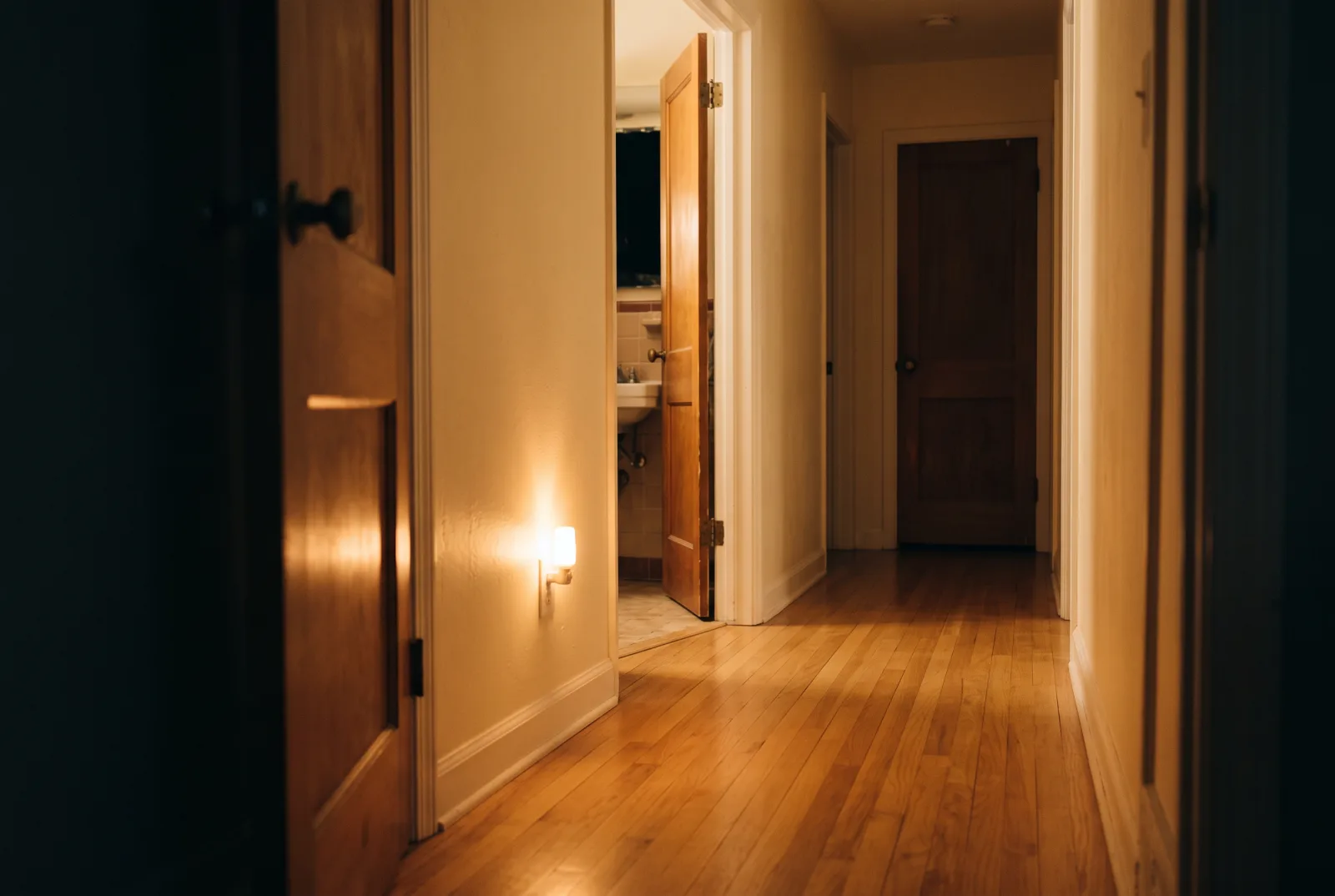
NIA also suggests a few nighttime safety habits, which matter more if you're up more often at night: keep a lamp within easy reach of the bed, use a night-light in the hallway or bathroom, and remove things you could trip over, like area rugs and cords.
When to talk with your doctor
NIA's advice is straightforward: if you're always sleepy, or you find it hard to get enough sleep at night, it may be time to talk with a doctor. The CDC lists signs of poor sleep quality worth raising with your health care provider if they happen regularly:
- Trouble falling asleep
- Waking up repeatedly during the night
- Feeling sleepy or tired even after getting enough sleep
A sleep diary can make that conversation more useful. NIA suggests keeping one for a couple of weeks, noting when you go to bed, when you wake during the night and when you get up for the day, along with caffeine, alcohol and exercise. And NIA advises talking with your doctor before starting any medication or supplement to improve your sleep.
The short version: key numbers
- CDC: 7 to 9 hours for ages 61 to 64; 7 to 8 hours for 65 and older.
- NIA: about the same as all adults, seven to nine hours a night.
- The floor: 7 hours in every guideline.
- What changes: earlier timing, lighter sleep and more awakenings, mostly settled by about 60.
- What helps: a steady schedule, daytime light and activity, a wind-down routine, and a doctor's visit if you're always tired.
Sources
- Centers for Disease Control and Prevention — About Sleep
- National Institute on Aging — Sleep and Older Adults
- Watson NF, et al. — Recommended Amount of Sleep for a Healthy Adult: A Joint Consensus Statement of the American Academy of Sleep Medicine and Sleep Research Society, Sleep, 2015
- Hirshkowitz M, et al. — National Sleep Foundation's sleep time duration recommendations: methodology and results summary, Sleep Health, 2015
- Ohayon MM, et al. — Meta-analysis of quantitative sleep parameters from childhood to old age in healthy individuals, Sleep, 2004
- Li J, Vitiello MV, Gooneratne NS. — Sleep in Normal Aging, Sleep Medicine Clinics, 2018
- National Heart, Lung, and Blood Institute — How Sleep Works: Your Sleep/Wake Cycle
- National Heart, Lung, and Blood Institute — Healthy Sleep Habits
- National Institute of General Medical Sciences — Circadian Rhythms
This article is general information, not medical advice. Talk to your doctor before changing your diet, exercise or medication.